
Are interdental brushes as good as floss?
Interdental brushes and floss are both effective tools for cleaning between teeth and maintaining oral hygiene, but they have different advantages and may suit different needs:
Interdental Brushes
- Effectiveness: Studies suggest that interdental brushes can be more effective than floss at removing plaque and reducing gingivitis, especially in larger interdental spaces.
- Ease of Use: Many people find interdental brushes easier to use than floss, particularly for cleaning around braces, bridges, and dental implants.
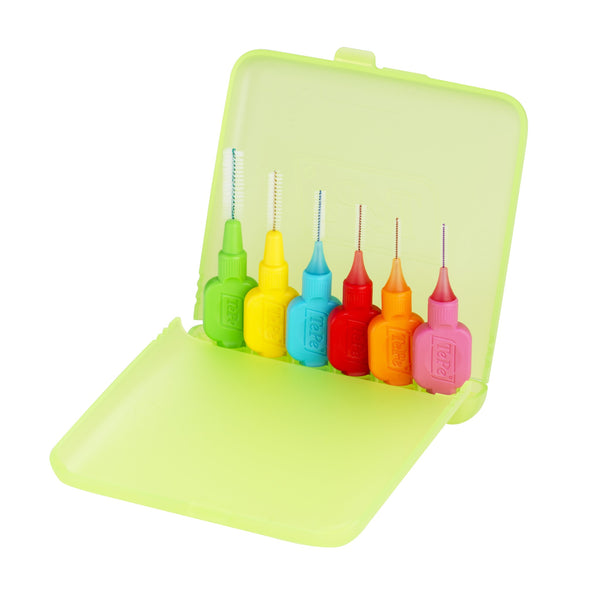
- Size Variety: Interdental brushes come in various sizes to fit different spaces between teeth, making them versatile for different dental conditions.
- Gum Health: Interdental brushes clean the areas effectively that a toothbrush cannot reach.
Dental floss
- Effectiveness: Dental floss is highly effective for removing plaque and food particles in narrow spaces where interdental brushes might not fit.
- Versatility: Floss can reach areas that are difficult for interdental brushes, such as the tight contacts between teeth.
- Technique Sensitivity: Proper flossing technique is essential for effective plaque removal, which can be challenging for some people to master.
Recommendations
- Combination Use: For optimal oral hygiene, a combination of both interdental brushes and floss may be recommended. Floss can be used for tight spaces, while interdental brushes can clean larger gaps and around dental work.
- Individual Needs: The choice between interdental brushes and floss may depend on individual dental conditions, personal preference, and ease of use. Consulting with a dental professional can help determine the best option for your specific needs.
Both interdental brushes and floss are valuable tools for maintaining oral health. Their effectiveness can vary based on individual circumstances, the most effective tool is one that fits correctly and is used consistently.